01High winds
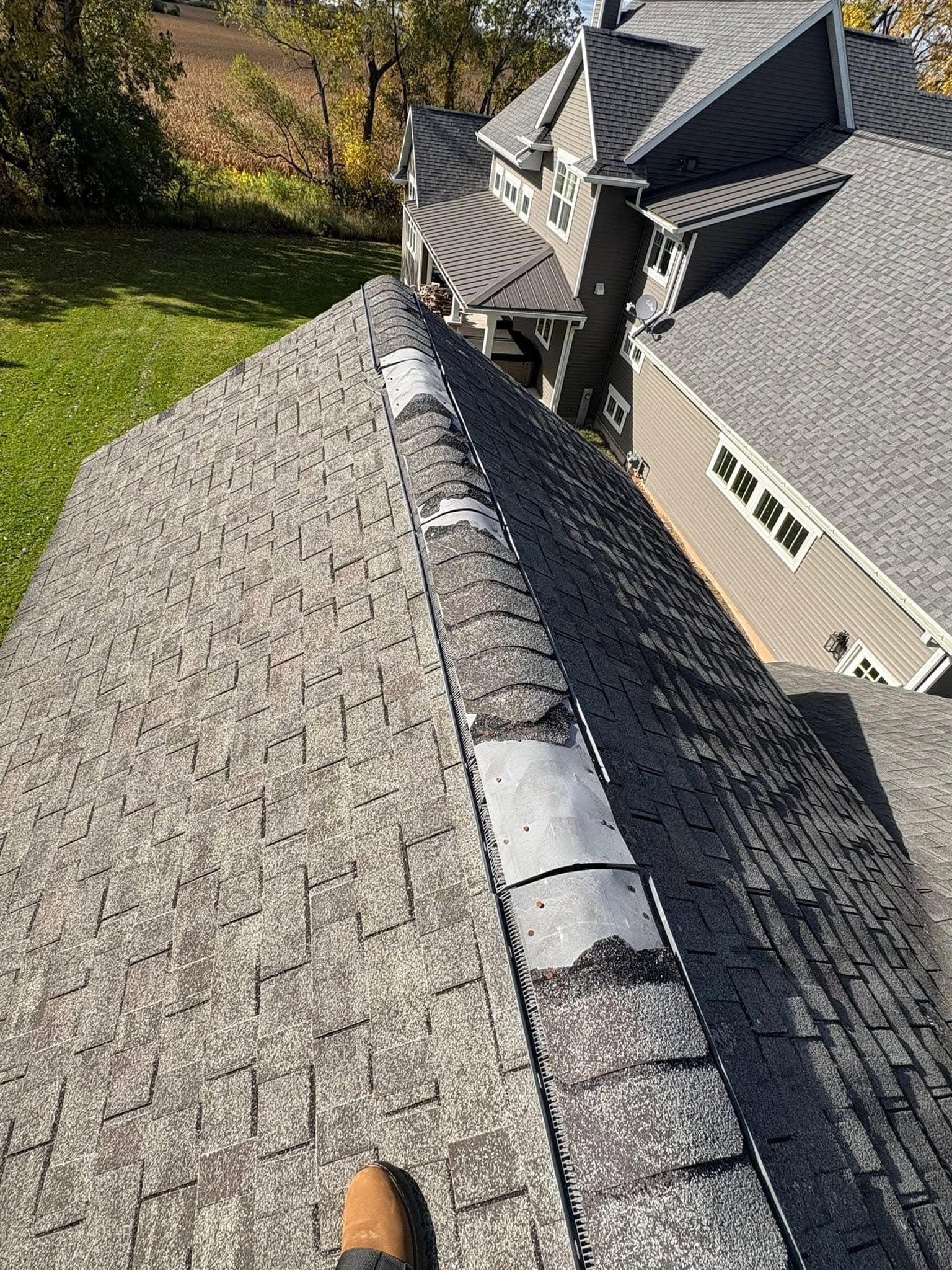
Ridge-cap shingles may loosen or go missing.
Ridge materials sit at an exposed roof peak. After severe weather, missing or displaced ridge-cap shingles are a visible condition worth documenting and inspecting.
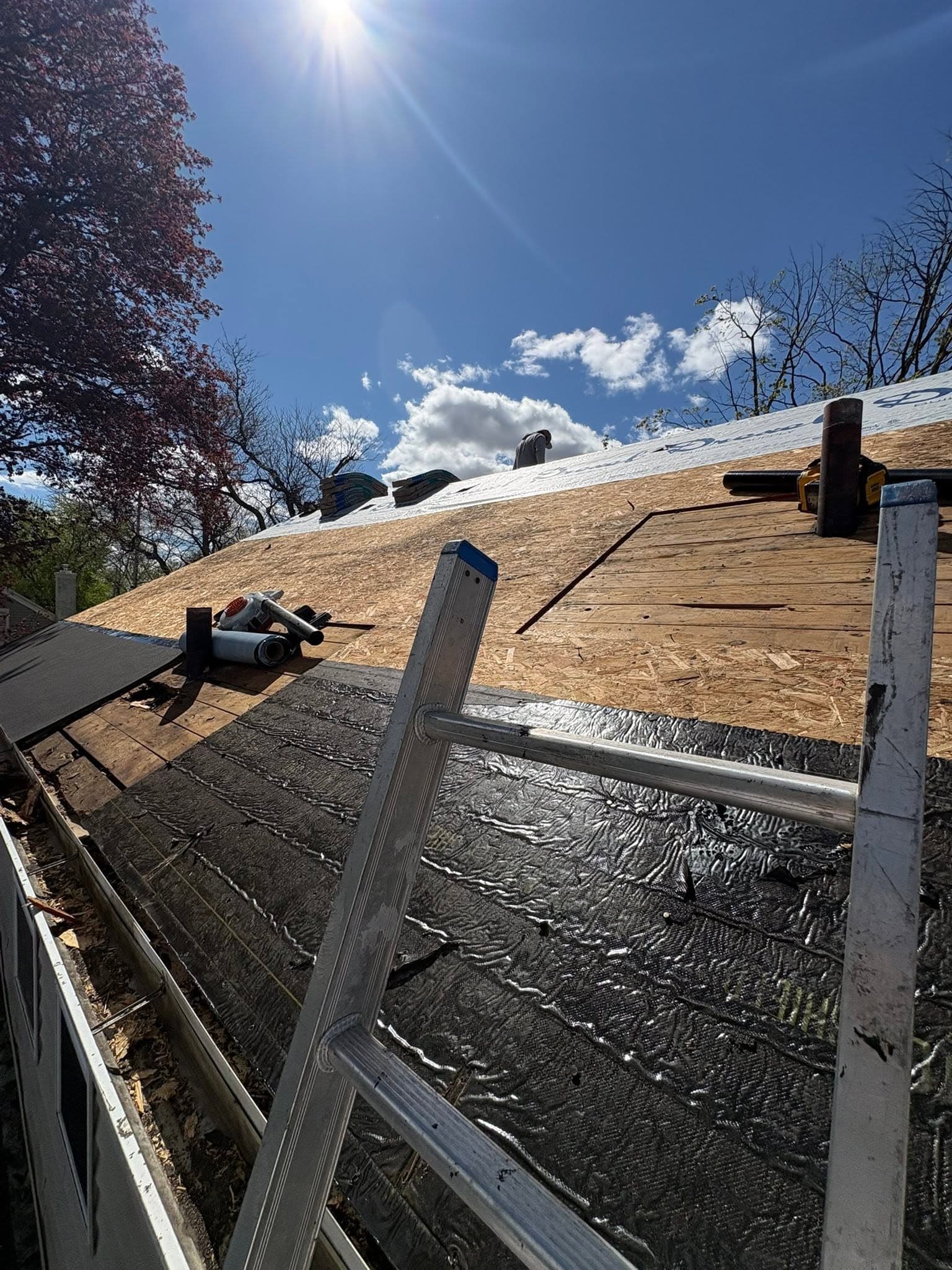
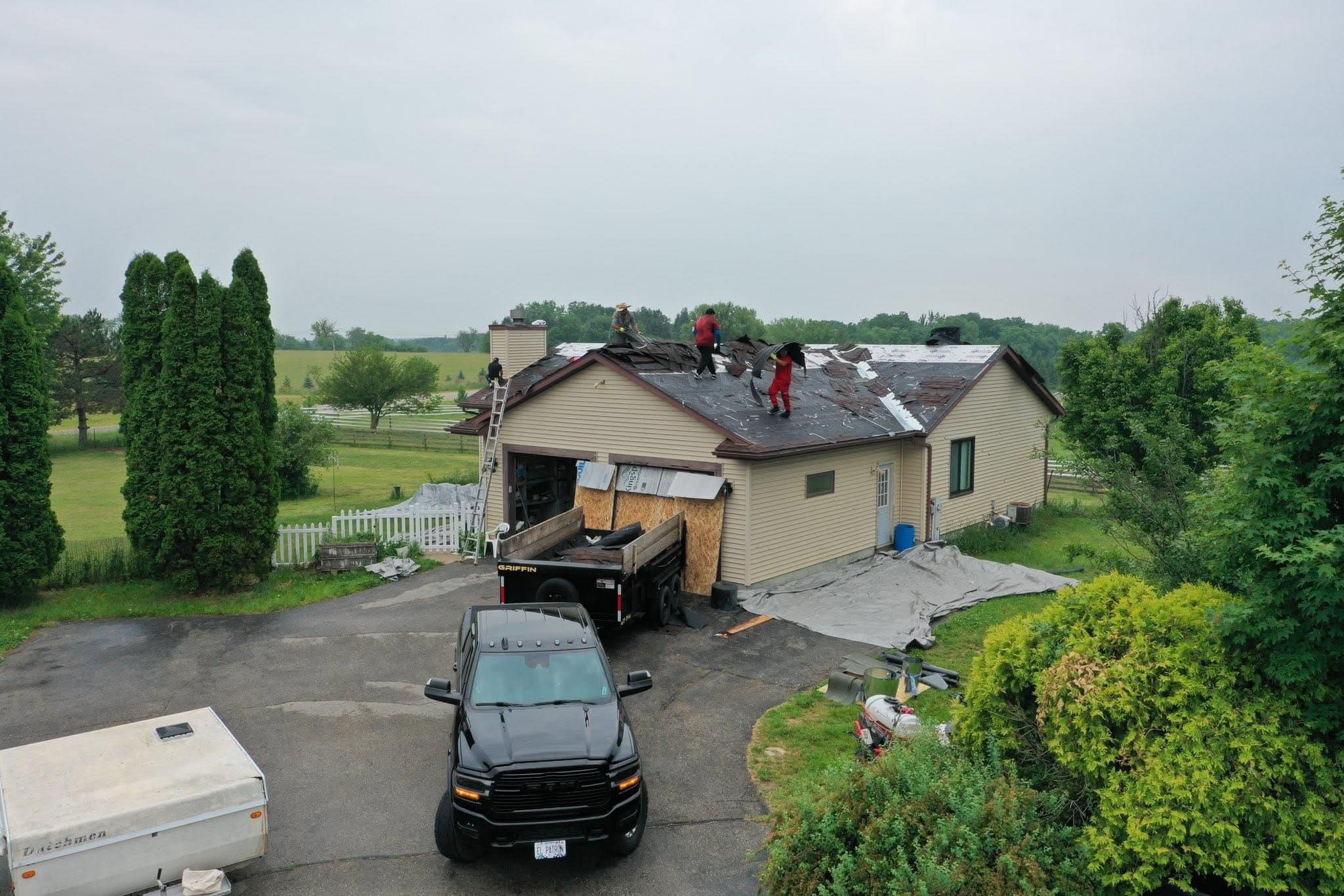
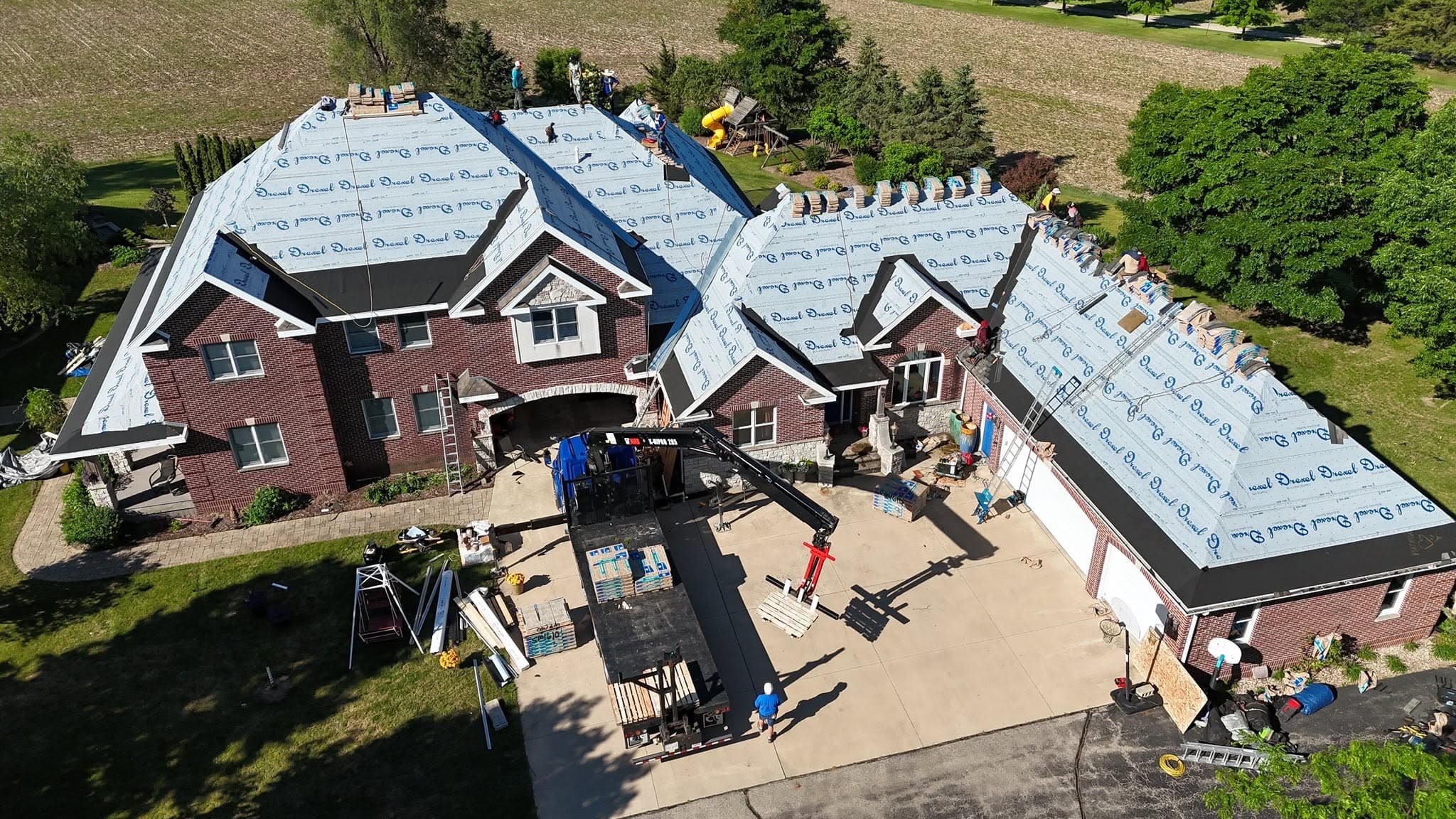
Roofing work in progress; the photograph does not establish what caused the prior roof condition.
Storm damage restoration
When severe weather affects a Central Wisconsin property, a focused review and clear documentation can turn uncertainty into a practical restoration plan.
A measured first step
Record when the concern appeared, note the areas you can safely see, and avoid assuming the full scope from the ground. A closer review can identify visible conditions and the project questions that follow.
The page photograph shows active roofing work. It is used as restoration context and does not by itself prove storm causation.
Storm-damage support
Assessment, documentation, and a defined repair direction each answer a different question.
Review the visible roof and exterior areas connected to the concern and identify conditions that need attention.
Organize relevant observations and project photographs so the condition being discussed stays specific.
Translate the reviewed conditions into a practical exterior-work scope without making policy or coverage determinations.
How storm damage escalates
Severe weather does not affect every roof in the same way. These photographs show one possible progression that can begin with displaced roof materials and lead to exposed layers that need closer review.
The images document visible roofing conditions. They do not, by themselves, establish causation or determine insurance coverage.
Ridge materials sit at an exposed roof peak. After severe weather, missing or displaced ridge-cap shingles are a visible condition worth documenting and inspecting.
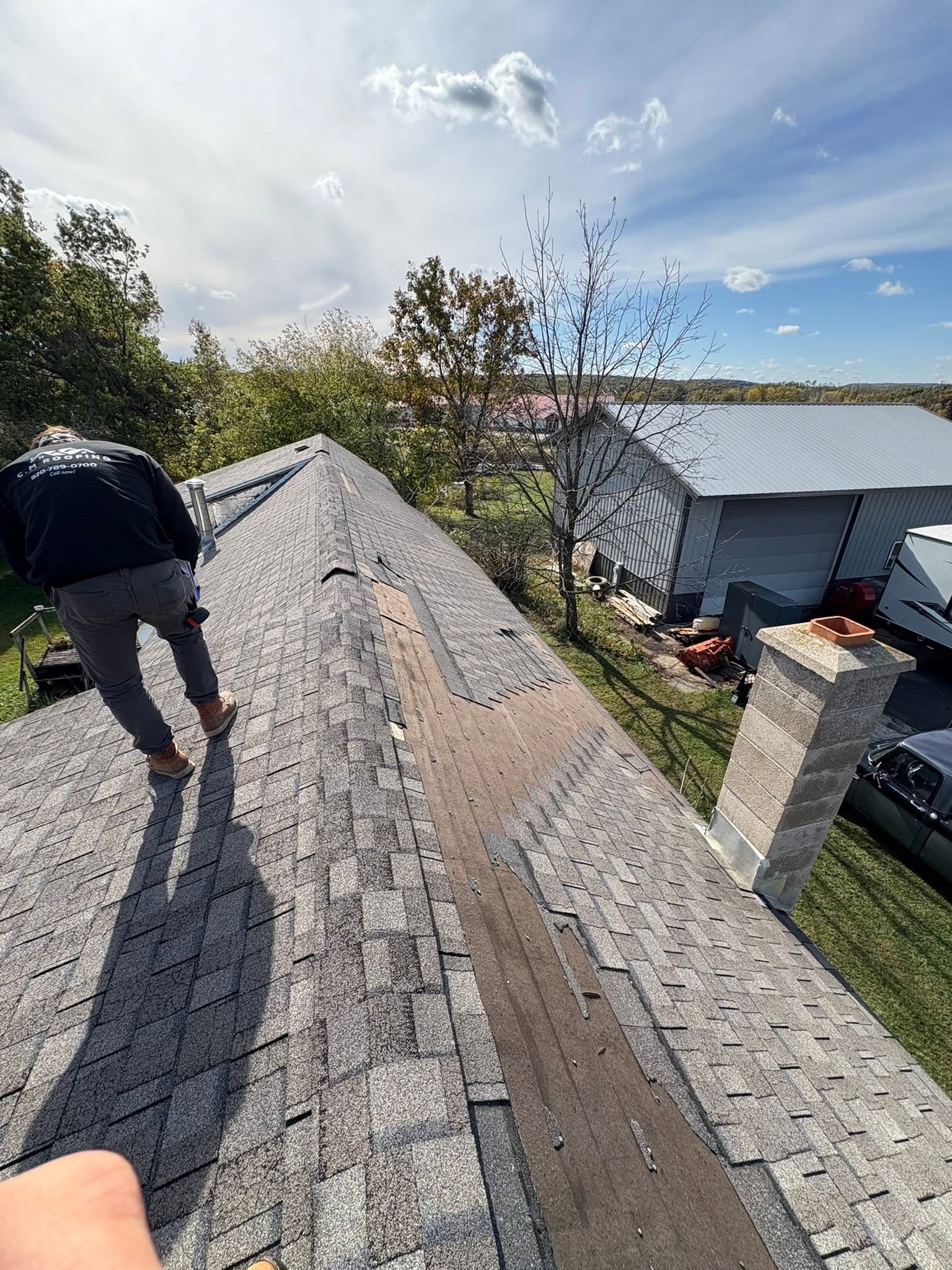
When shingles are no longer covering part of the roof, the layers below can be left exposed. An inspection can clarify the affected area and the appropriate repair scope.
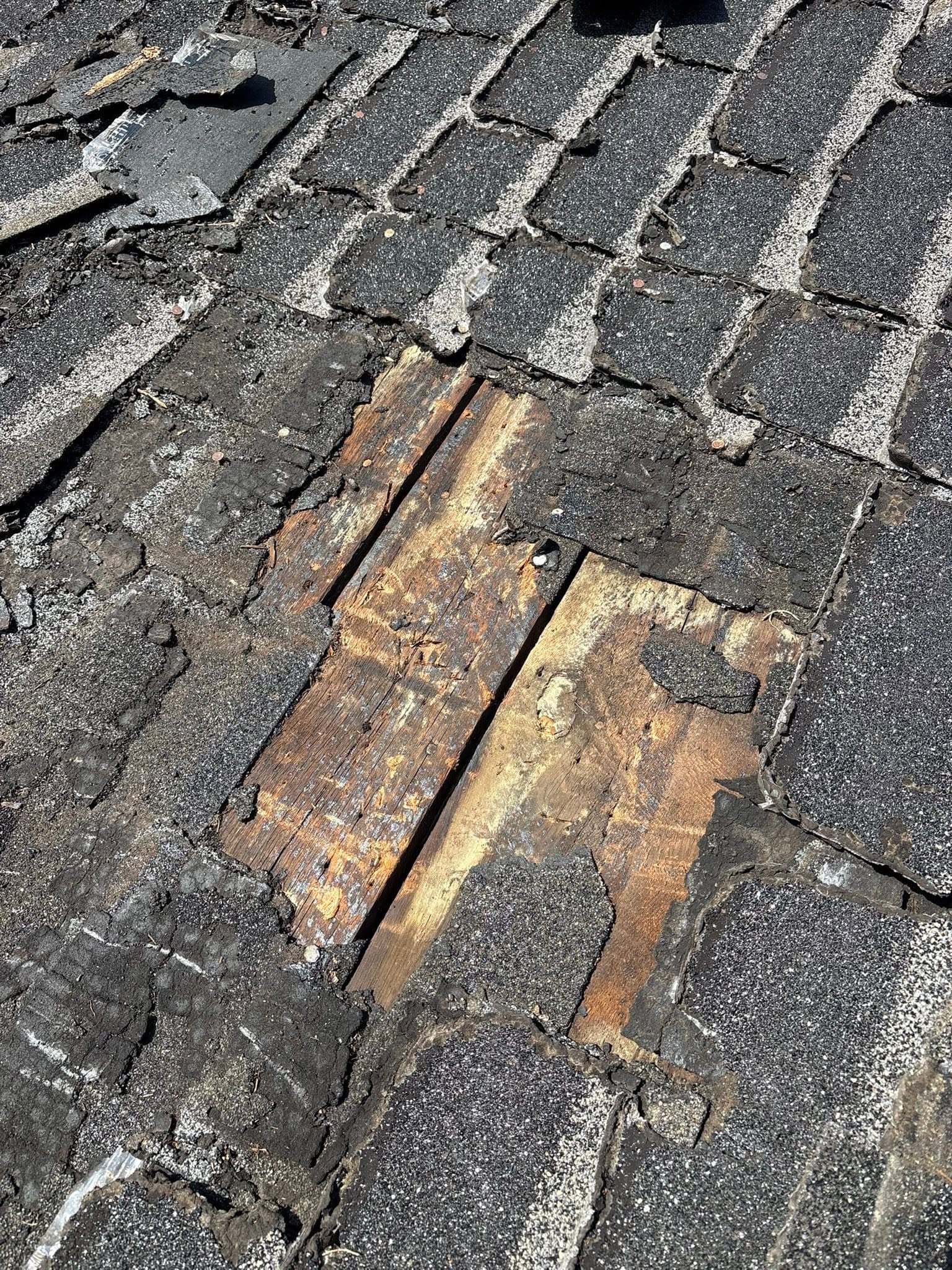
If water reaches the roof assembly, leaking or deteriorated decking may eventually be uncovered. Conditions like these can have more than one cause and should be assessed directly.
Why choose CM Roofing
A calm process gives assessment, documentation, scope, and repair work their own place.
Start with the property and the specific roof or exterior areas that prompted concern.
Keep observations and available photographs tied to the areas being discussed.
Clarify what exterior work is proposed and which material and project decisions remain.
Keep roofing recommendations distinct from insurer decisions and policy interpretation.
The storm-response process
The sequence stays focused on the property condition and the exterior project itself.
01
Record what you noticed, when it appeared, and which areas are part of the concern.
02
Review the relevant roof and exterior conditions more closely.
03
Organize the visible findings and photographs used in the project conversation.
04
Clarify the repair or replacement work being proposed for the affected exterior areas.
05
Carry out and review the agreed exterior project scope.
Storm-damage questions
Every property condition differs, so general guidance should lead to a specific review—not a rushed conclusion.
Note when you observed it, record the areas you can see safely, and arrange a focused review. Avoid climbing onto the roof or assuming the full scope from a ground-level view.
Start with what you observed
Share when the concern appeared, which exterior areas are involved, and the best way to reach you.
Estimate request
Complete the fields below to prepare an estimate request.